DTI (Department of Trade and Industry) is a Philippine government agency that promotes business growth, supports entrepreneurs, protects consumers, and develops industries. It provides services such as business registration, trade assistance, and market support. DTI aims to strengthen the economy by encouraging innovation, fair competition, and sustainable business development nationwide
Starting a business in the Philippines requires proper registration to make your operations legal and recognised. For many small entrepreneurs, freelancers, online sellers, and first-time business owners, the first step is registering a business name through the Department of Trade and Industry (DTI). The DTI Registration process allows individuals operating as sole proprietors to officially register their business name. After successful registration, the owner receives a DTI Certificate of Business Name Registration, which serves as proof that the chosen business name has been recorded with the government.
Whether you plan to sell products online, open a small shop, offer professional services, or build an e-commerce business, understanding the DTI requirements, application steps, fees, and renewal rules can help you avoid delays.
The official DTI website provides information about its programmes, services, and business support activities:
For business name applications, applicants can use the official DTI Business Name Registration System (BNRS):
What Is DTI Registration?
DTI Registration is the official process of registering a business name with the Department of Trade and Industry in the Philippines. It is mainly intended for individuals who want to operate a sole proprietorship business. A registered business name gives entrepreneurs legal recognition when conducting commercial activities under a specific name.
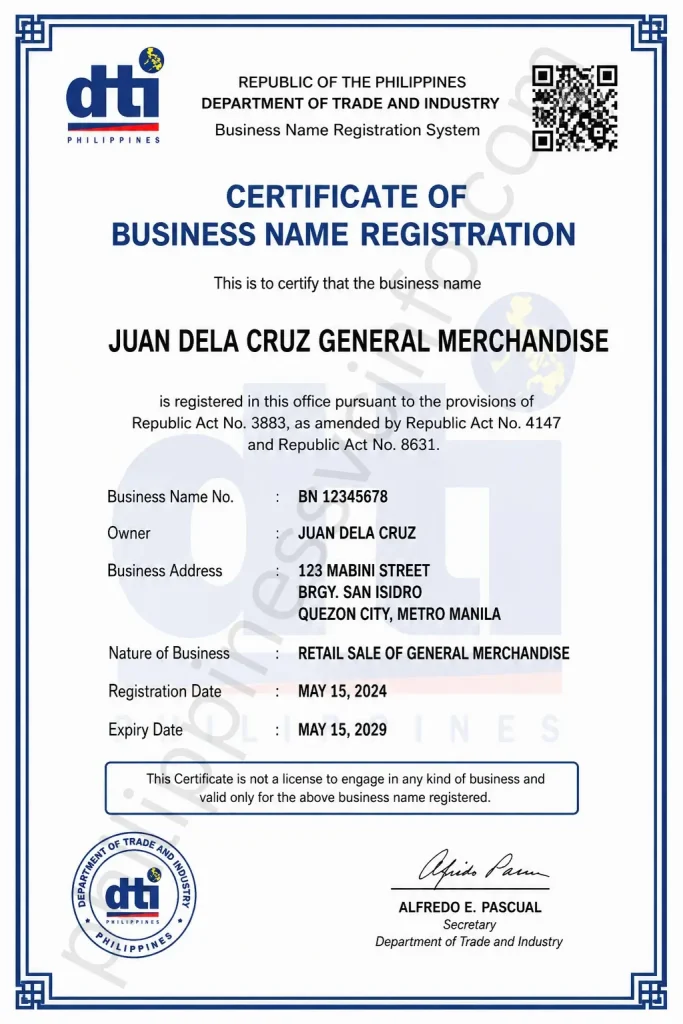
For example, if a person wants to sell handmade products online under the name “Maria’s Crafts”, the owner may register that business name through DTI before using it for business transactions.
A DTI registration confirms that:
- The business name has been recorded in the DTI system.
- The owner has authority to use the registered business name.
- The business name registration has a validity period.
- The owner can use the certificate as one of the documents needed for other business permits.
However, DTI registration alone does not automatically provide a complete business permit. Depending on the type of business and location, additional registrations may be required from other government agencies, such as local government offices and tax authorities.
Understanding DTI Philippines and Its Role
The Department of Trade and Industry (DTI Philippines) is a government agency responsible for promoting trade, supporting businesses, protecting consumers, and helping entrepreneurs develop their enterprises.
DTI supports many types of businesses, including:
- Micro, small, and medium enterprises (MSMEs)
- Retail businesses
- Online sellers
- Start-up entrepreneurs
- Manufacturers
- Service providers
The department provides different services related to:
- Business registration
- Entrepreneurship development
- Consumer protection
- Industry growth
- Business training and support programmes
For many small entrepreneurs, the DTI Business Name Registration is the starting point before expanding into a fully established business.
Who Needs DTI Registration?
Not every individual needs DTI registration. It is mainly required for people who want to operate a business using a registered business name as a sole proprietor.
You may need DTI Business Name Registration if you:
- Sell products online through marketplaces
- Operate a small retail store
- Provide freelance or service-based work under a business name
- Start a home-based business
- Create a brand name for commercial activities
- Manufacture or sell products independently
Examples include:
| Business Type | Example |
|---|---|
| Online Store | Selling clothes, accessories, gadgets |
| Food Business | Homemade food, catering services |
| Services | Repair services, consultancy, freelancing |
| Retail | Small shops and kiosks |
| Creative Business | Printing, design, handmade products |
DTI Business Name Registration vs Business Permit
Many beginners confuse DTI Registration with a complete business licence. These are different processes.
| DTI Registration | Business Permit |
|---|---|
| Registers the business name | Allows operation in a specific location |
| Managed by DTI | Usually issued by local government units |
| Mainly for sole proprietors | Required for operating legally in many areas |
| Provides Business Name Certificate | Provides local operating authority |
A DTI Certificate proves that your business name is registered, but you may still need additional permits before officially operating.
Benefits of Having a DTI Certificate
Obtaining a DTI Certificate of Business Name Registration provides several advantages for entrepreneurs.
1. Official Business Identity
A registered business name creates a professional identity. Customers, suppliers, and partners may have greater confidence when dealing with a business that has official registration.
2. Easier Business Transactions
Many financial institutions, suppliers, and organisations may request business registration documents when opening accounts or establishing partnerships.
3. Brand Protection
Registering a business name helps prevent other entrepreneurs from registering the same or confusingly similar name within the DTI system.
4. Support Opportunities
Registered entrepreneurs may access business-related programmes, training, and services offered by government agencies.
5. Professional Image
For online sellers and service providers, having a registered business name can improve customer trust and credibility.
DTI Registration Requirements 2026
Before applying for DTI Registration, applicants should prepare the necessary information and documents.
The exact requirements may depend on the applicant’s situation, but common requirements include:
Basic Information Required
Applicants generally need:
- Proposed business name
- Owner’s personal information
- Business address
- Contact details
- Business activity description
Valid Identification
A valid government-issued identification document may be required during verification.
Examples may include:
- Philippine Identification Card
- Passport
- Driver’s License
- Other accepted government IDs
Applicants should check the latest requirements directly through the official DTI platforms before submitting an application.
Things to Check Before Registering a Business Name
Choosing the right business name is an important step in the DTI Business Name Registration process.
Before applying, consider the following:
1. Make the Name Unique
A business name should not be identical or confusingly similar to an existing registered name.
2. Avoid Restricted Words
Some words may require additional approval or may not be allowed depending on regulations.
3. Think Long-Term
Choose a name that can represent your business as it grows.
4. Match Your Business Activity
Your chosen name should reflect the products or services you provide.
Example:
A name focused only on clothing may not be suitable if you plan to expand into food products later.
How to Register a Business Name Through DTI Online
The DTI Business Name Registration System (BNRS) allows entrepreneurs to register their business names online without immediately visiting a DTI office. The online system is designed for convenience, allowing applicants to submit information, pay registration fees, and receive their DTI Certificate of Business Name Registration electronically.
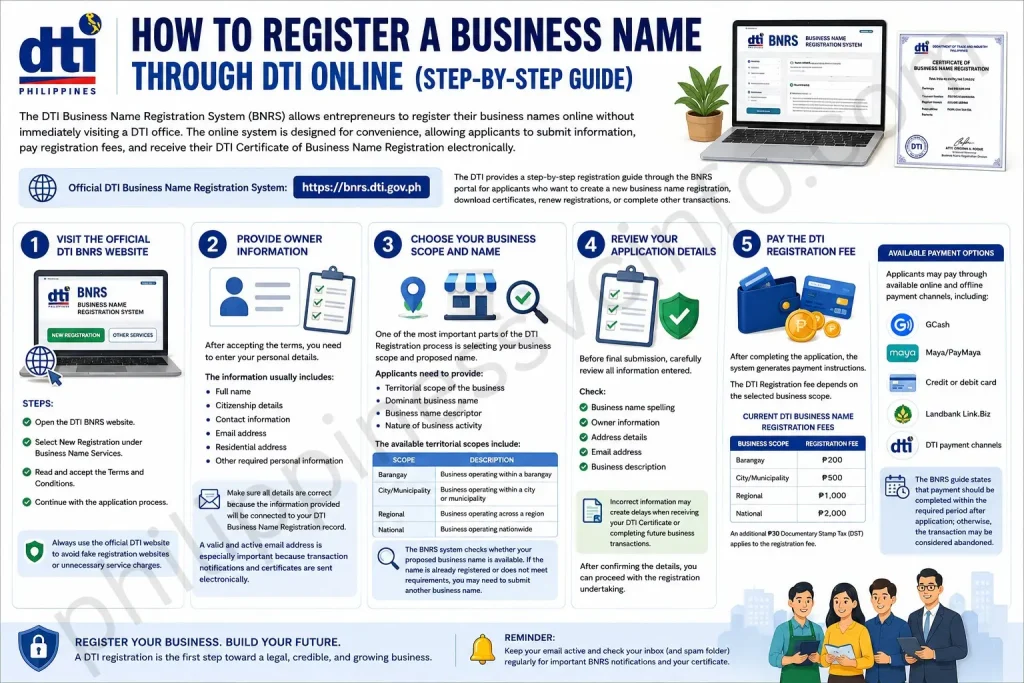
The DTI provides a step-by-step registration guide through the BNRS portal for applicants who want to create a new business name registration, download certificates, renew registrations, or complete other transactions.
Step 1: Visit the Official DTI BNRS Website
Start your DTI Registration by accessing the official BNRS portal.
https://bnrs.dti.gov.ph/search#
Steps:
- Open the DTI BNRS website.
- Select New Registration under Business Name Services.
- Read and accept the Terms and Conditions.
- Continue with the application process.
Always use the official DTI website to avoid fake registration websites or unnecessary service charges.
Step 2: Provide Owner Information
After accepting the terms, you need to enter your personal details.
https://bnrs.dti.gov.ph/registration/create
The information usually includes:
- Full name
- Citizenship details
- Contact information
- Email address
- Residential address
- Other required personal information
Make sure all details are correct because the information provided will be connected to your DTI Business Name Registration record.
A valid and active email address is especially important because transaction notifications and certificates are sent electronically.
Step 3: Choose Your Business Scope and Name
One of the most important parts of the DTI Registration process is selecting your business scope and proposed name.
Applicants need to provide:
- Territorial scope of the business
- Dominant business name
- Business name descriptor
- Nature of business activity
The available territorial scopes include:
| Scope | Description |
|---|---|
| Barangay | Business operating within a barangay |
| City/Municipality | Business operating within a city or municipality |
| Regional | Business operating across a region |
| National | Business operating nationwide |
The BNRS system checks whether your proposed business name is available. If the name is already registered or does not meet requirements, you may need to submit another business name.
Step 4: Review Your Application Details
Before final submission, carefully review all information entered.
Check:
- Business name spelling
- Owner information
- Address details
- Email address
- Business description
Incorrect information may create delays when receiving your DTI Certificate or completing future business transactions.
After confirming the details, you can proceed with the registration undertaking.
Step 5: Pay the DTI Registration Fee
After completing the application, the system generates payment instructions.
The DTI Registration fee depends on the selected business scope.
Current DTI Business Name Registration fees are:
| Business Scope | Registration Fee |
|---|---|
| Barangay | ₱200 |
| City/Municipality | ₱500 |
| Regional | ₱1,000 |
| National | ₱2,000 |
An additional ₱30 Documentary Stamp Tax (DST) applies to the registration fee.
Available Payment Options
Applicants may pay through available online and offline payment channels, including:
- GCash
- Maya/PayMaya
- Credit or debit card
- Landbank Link.Biz
- DTI payment channels
The BNRS guide states that payment should be completed within the required period after application; otherwise, the transaction may be considered abandoned.
How Much Does DTI Registration Cost?
Many beginners ask, “How much is DTI Registration in the Philippines?”
The basic cost depends on the scope of your business.
Example:
Small Local Business
A home-based seller operating only within a barangay may pay:
- Registration fee: ₱200
- Documentary Stamp Tax: ₱30
Estimated total:
₱230
Nationwide Business
A business planning nationwide operations may pay:
- Registration fee: ₱2,000
- Documentary Stamp Tax: ₱30
Estimated total:
₱2,030
The final amount depends on your selected business scope and applicable fees.
How to Download Your DTI Certificate Online
After successful payment, applicants can access their DTI Certificate of Business Name Registration online.
The certificate serves as proof that the business name has been registered with DTI.
Step 1:
Visit the BNRS website and open Transaction Inquiry.
Step 2:
Enter your reference code.
Step 3:
Verify your transaction using the code sent to your registered email.
Step 4:
Open the transaction summary and download the certificate from the available downloadable documents section.
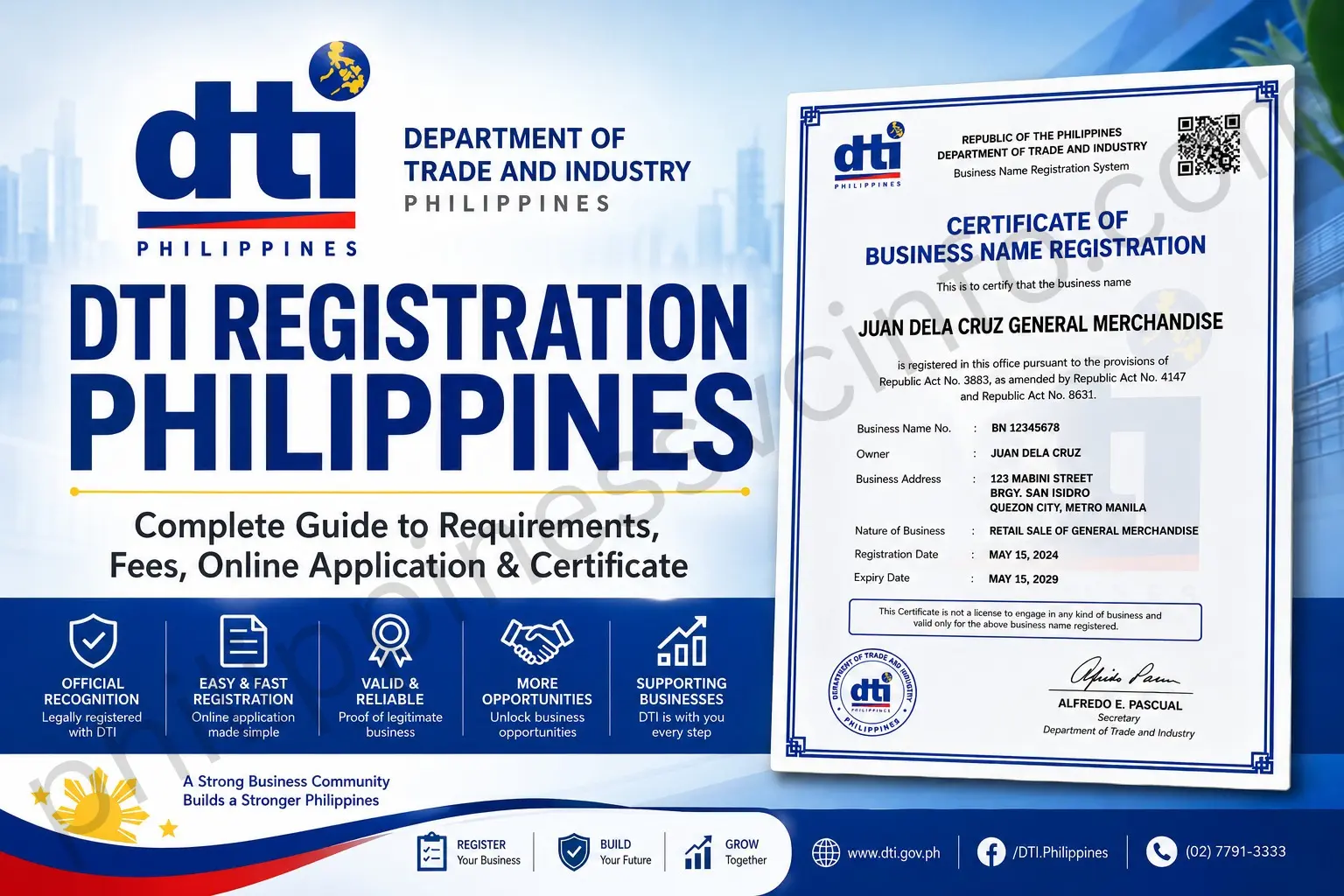
What Information Appears on a DTI Certificate?
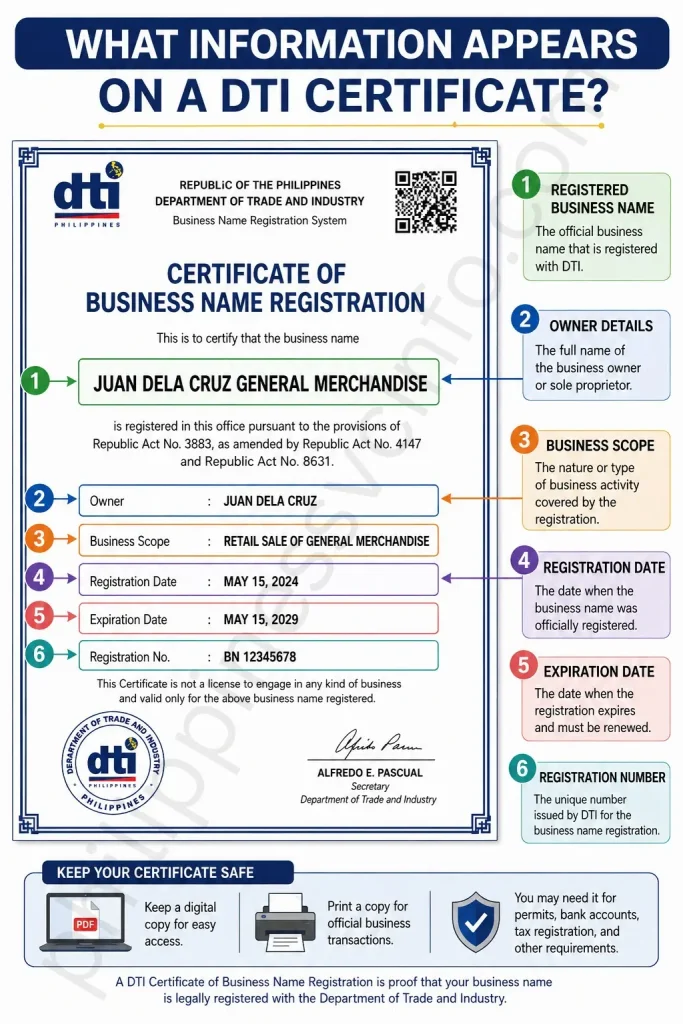
A typical DTI Certificate of Business Name Registration contains important business information, such as:
- Registered business name
- Owner details
- Business scope
- Registration date
- Expiration date
- Registration number
Entrepreneurs should keep a digital and printed copy of their certificate for future business requirements.
How Long Is DTI Registration Valid?
A common question among entrepreneurs is:
“How many years is a DTI Certificate valid?”
A DTI Business Name Registration is valid for five (5) years from the date of registration. After this period, business owners need to renew their registration if they want to continue using the registered business name.
DTI Business Name Renewal Process
Renewing a DTI Registration is also completed through the BNRS portal.
Business owners should renew before expiration to avoid interruptions.
Steps to Renew DTI Registration:
- Visit the official BNRS website.
- Select the renewal option.
- Enter your reference code or transaction details.
- Update required information if needed.
- Review the renewal details.
- Complete payment.
- Receive confirmation of renewal.
The renewal process follows a similar online procedure to the original DTI Business Name Registration.
Common Mistakes to Avoid During DTI Registration
Many first-time applicants experience delays because of small errors.
Avoid these mistakes:
1. Using Unofficial Websites
Only use official DTI platforms. Fake websites may collect personal information or unnecessary payments.
2. Choosing a Restricted or Similar Business Name
Before submitting your application, check whether your chosen business name is acceptable.
A strong business name should be:
- Unique
- Relevant to your business
- Easy to remember
- Appropriate for future growth
3. Entering Incorrect Information
Mistakes in:
- Email address
- Owner details
- Business address
can affect certificate delivery and future transactions.
4. Forgetting Renewal
A DTI Certificate does not last permanently. Remember the five-year validity period and renew when required.
What Happens After Getting a DTI Certificate?
Many people think receiving a DTI Certificate means the entire business registration process is finished. However, DTI registration is only one part of establishing a legal business.
Depending on your business type and location, you may also need:
- Local government permits
- Tax registration
- Other industry-specific requirements
The next steps depend on your business activities and operating location.
What To Do After Completing DTI Registration
Receiving your DTI Certificate of Business Name Registration is an important milestone, but it is only the beginning of building a legally operating business in the Philippines.
A registered business name allows you to use your chosen business identity, but entrepreneurs should understand that other registrations may still apply depending on the type, location, and activities of the business.
After completing your DTI Registration, consider the following next steps:
1. Secure Local Business Permits
Many businesses need permits from their local government unit (LGU).
These permits confirm that your business is allowed to operate in a specific location.
Requirements may vary depending on:
- Municipality or city
- Business activity
- Type of establishment
- Local regulations
Examples may include:
- Barangay clearance
- Mayor’s permit
- Other local permits
Always check with your local government office for the latest requirements.
2. Register With the Bureau of Internal Revenue (BIR)
A business owner may also need to complete tax registration with the Bureau of Internal Revenue (BIR).
BIR registration is separate from DTI Business Name Registration.
The DTI registers your business name, while BIR registration focuses on tax obligations and official tax documents.
Depending on your situation, BIR registration may involve:
- Taxpayer registration
- Official receipts or invoicing requirements
- Tax compliance responsibilities
DTI Registration vs BIR Registration: What Is the Difference?
Many new entrepreneurs ask whether they need DTI or BIR first.
The two registrations have different purposes.
| DTI Registration | BIR Registration |
|---|---|
| Registers your business name | Registers tax responsibilities |
| Managed by Department of Trade and Industry | Managed by Bureau of Internal Revenue |
| Gives Business Name Certificate | Provides tax registration documents |
| Mainly for business identity | Required for tax compliance |
In simple terms:
DTI gives your business a registered name, while BIR allows you to comply with government tax requirements.
Is DTI Registration Required for Online Sellers?
Many online sellers ask:
“Do I need DTI Registration if I sell online?”
If you operate a business using a specific business name, registering that name through DTI can help establish your business identity.
Online entrepreneurs commonly register businesses involved in:
- Clothing sales
- Food products
- Handmade items
- Digital services
- Reselling
- E-commerce activities
Having a registered business name can also help when dealing with suppliers, payment providers, and customers.
Can Foreigners Register a Business Name Through DTI?
DTI registration rules may differ depending on citizenship, residency, and business structure.
Foreign individuals should check the latest eligibility requirements directly through official DTI channels before applying.
Advantages and Limitations of DTI Registration
Understanding what a DTI Certificate does — and does not do — helps business owners make better decisions.
Advantages
Creates Business Recognition
A registered business name provides an official identity for commercial activities.
Builds Customer Confidence
Customers often feel more comfortable dealing with businesses that have formal registration.
Helps With Business Expansion
Registration documents may support future applications involving suppliers, financial services, and partnerships.
Provides Government Recognition
The registration connects your business name with an official government record.
Limitations
A DTI Certificate does not:
- Automatically provide a business permit
- Replace tax registration
- Guarantee exclusive ownership of a trademark
- Remove the need for other legal requirements
Business owners should complete all necessary registrations based on their circumstances.
Expert Tips Before Applying for DTI Registration
Choose a Future-Proof Business Name
Avoid names that are too narrow if you plan to expand later.
For example, a name focused only on one product may limit your future business growth.
Keep Your Information Updated
Maintain access to the email address used during registration because important notifications may be sent there.
Save Your Registration Details
Keep copies of:
- DTI Certificate
- Reference number
- Payment confirmation
- Login details
These records can help when renewing or checking your application.
Use Only Official DTI Platforms
Avoid websites claiming to provide faster DTI registration services unless they are officially connected with DTI.
The safest options are:
Frequently Asked Questions About DTI Registration
Conclusion
DTI Registration is an important step for entrepreneurs who want to establish a recognised business identity in the Philippines. By registering a business name through the Department of Trade and Industry (DTI), business owners can build customer trust, improve credibility, and create a stronger foundation for future growth. A DTI Certificate of Business Name Registration confirms that your chosen business name is officially recorded. However, DTI Registration alone may not complete the entire business setup process. Depending on your business activities, you may also need local permits, BIR registration, and other government requirements. Always use official platforms when applying:
Completing your DTI Business Name Registration correctly helps your business operate more professionally and prepares it for long-term success.
Discover What You Need to Know:
- National ID Digital Copy: Complete Guide PhilSys Registration Process, Download & Use (2026)
- eRegistration: Complete Guide to Registration, Login, Requirements & Account Setup (2026)
- Philippines eTravel Card 2026: Complete Registration Guide, Requirements & QR Code
- Complete ORUS Guide 2026: BIR Registration, Login & Digital TIN ID
- eGovPH Philippines 2026: Registration, Login & Services Guide