Buwan ng Wika Costume for Male Philippines 2026: Traditional Filipino Outfit Ideas, DIY Tips, and Styling Guide
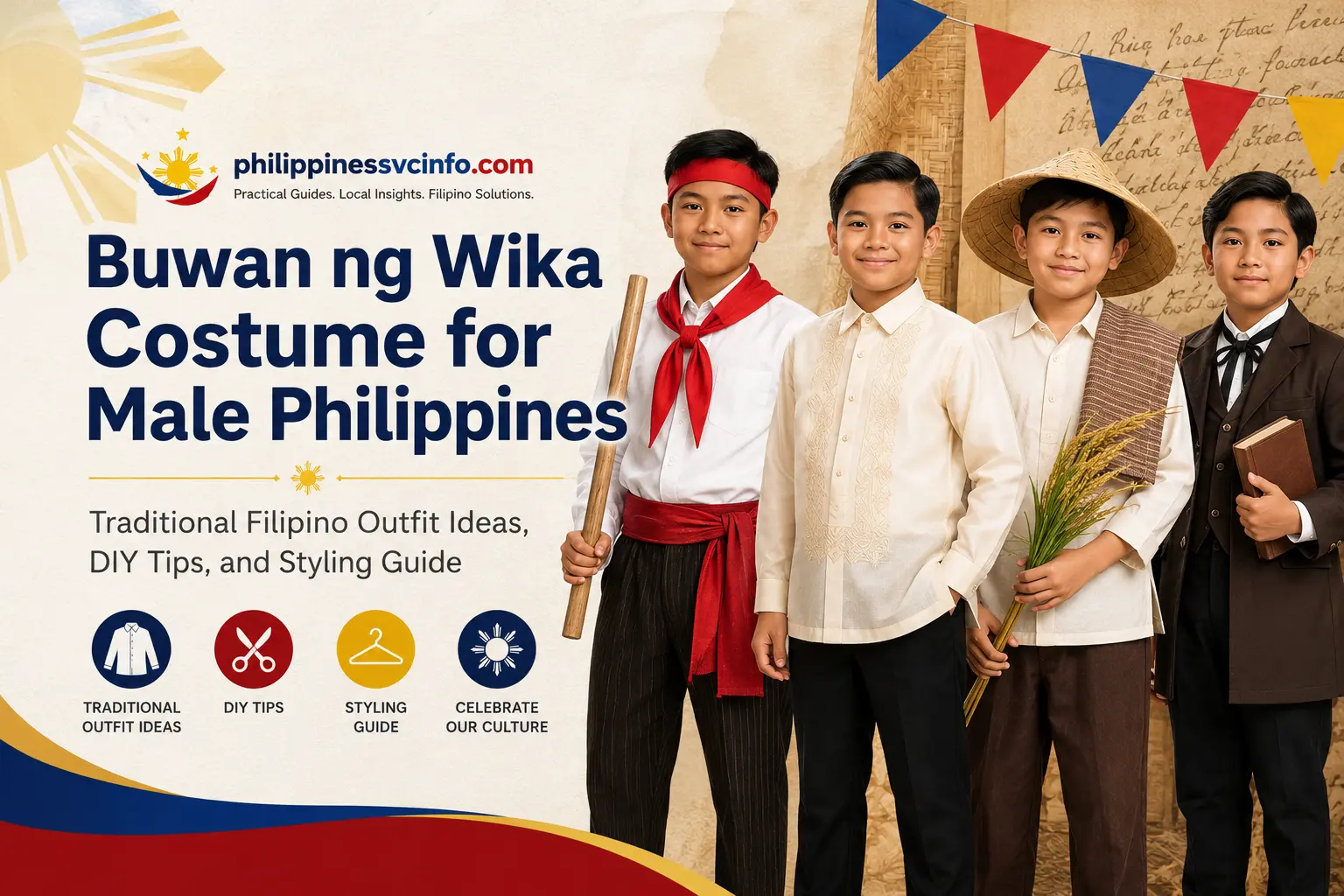
Choosing a Buwan ng Wika costume for male students and adults is an opportunity to celebrate Filipino identity, history, language, and cultural heritage. Every August, schools and communities across the Philippines organise activities that highlight the importance of Filipino and the country’s many other languages, traditions, and cultural expressions.
For boys, teenagers, and adult men, the best Buwan ng Wika costume depends on the event. A formal school programme may call for an embroidered Barong Tagalog, while a historical presentation might require a Katipunero outfit inspired by the Philippine Revolution. A farmer-inspired costume or a carefully researched regional ensemble can also be suitable for cultural celebrations.
The goal is not simply to wear traditional-looking clothing. It is to choose an outfit that reflects a particular cultural tradition or historical character respectfully. Students and parents can create an impressive appearance using affordable clothes, borrowed accessories, or a costume purchased specifically for the occasion.
For reliable information about Filipino language and cultural programmes, visit the official website of the Komisyon sa Wikang Filipino (KWF). The commission promotes the development and preservation of Filipino and other Philippine languages.
What Is the Best Buwan ng Wika Costume for Male Students?
The best Buwan ng Wika costume for male participants is one that matches the event’s theme, fits comfortably, and represents its intended tradition accurately. For most formal school celebrations, a Barong Tagalog is a practical choice. Students who need a more recognisable historical character can consider a José Rizal-inspired outfit or Katipunero clothing.
Here are five popular Buwan ng Wika costume ideas for male participants:
- Barong Tagalog: Ideal for formal ceremonies, school presentations, and Lakan competitions. Pair an embroidered barong with black trousers, a plain undershirt, and formal shoes.
- Katipunero costume: Suitable for historical role-play, patriotic performances, and presentations about the Philippine Revolution. A plain shirt, dark trousers, and a red neckerchief can create a recognisable look.
- Magsasaka costume: A farmer-inspired outfit works well for elementary school activities and rural-life presentations. Combine a simple shirt, comfortable trousers, a salakot-style hat, and a small towel over the shoulder.
- José Rizal-inspired attire: A dark suit or period-inspired coat, white shirt, dark trousers, and round eyeglasses can suggest the appearance associated with historical portraits of Rizal.
- Regional Filipino attire: Students may represent a particular community through clothing and textiles connected to its cultural traditions. This option requires extra care to avoid mixing unrelated cultural elements or treating sacred items as decorative accessories.
Parents should check the school’s instructions before purchasing anything. Some programmes specify a historical figure, regional identity, or dress code, so the most attractive costume may not necessarily be the most appropriate choice.
Traditional Filipino Clothing for Men: Which Style Should You Choose?
Traditional Filipino clothing includes different garments shaped by regional customs, historical influences, materials, and ways of life. Understanding the differences helps you select a Buwan ng Wika costume for male participants that suits the occasion.
Barong Tagalog: A Classic Formal Choice
The Barong Tagalog is a lightweight, often embroidered formal shirt commonly worn by Filipino men at ceremonies and special occasions. It is frequently made from materials such as piña, jusi, or other lightweight fabrics, depending on the garment’s construction and price.
For a polished Buwan ng Wika outfit for male students, choose a well-fitting barong, a plain undershirt, dark tailored trousers, and neat formal shoes. White and cream are traditional-looking options, although barongs are also available in other colours.
The barong is particularly suitable for school ceremonies, cultural presentations, and formal Lakan competitions. It also offers a practical advantage: the garment can be worn again for weddings, graduations, and other occasions.
The National Commission for Culture and the Arts (NCCA) provides cultural resources that can help readers explore Filipino arts and heritage. Its published material discusses the history and craftsmanship associated with piña fabric and the Barong Tagalog.
Camisa de Chino: A Simple Foundation for a Historical Look
A camisa de chino is a simple shirt commonly associated with historical and everyday clothing in the Philippines. A plain white version can serve as a starting point for certain farmer-inspired or historical costumes, depending on the period being represented.
For a school activity, pair the shirt with dark trousers and modest accessories. However, a modern white T-shirt is only a convenient substitute, not an authentic historical garment. If historical accuracy matters, research the intended character and period before choosing the shirt.
Katipunero Attire: Inspired by Filipino Revolutionaries
The Katipunero costume represents a historical theme connected with the Katipunan, a revolutionary organisation associated with the struggle against Spanish colonial rule. A costume inspired by its members may include a plain shirt, dark trousers, and a red cloth tied around the neck or head.
The exact clothing should depend on the character or period being portrayed. Avoid presenting a simplified school costume as a complete or universally accurate uniform for every Katipunero.
For children, use a cardboard or foam prop if the performance calls for a historical weapon. Real blades and other dangerous objects are unnecessary for a school celebration.
Magsasaka Attire: A Countryside-Inspired Costume
A magsasaka, or farmer, costume is a convenient choice for young boys because much of the outfit can be assembled from everyday clothing. A plain shirt, loose trousers, a woven hat, and a small towel can suggest a rural working outfit.
Keep the design practical rather than exaggerated. A costume should represent the intended theme without implying that all Filipino farmers dress alike. If the school presentation focuses on a particular region or historical period, adapt the clothing to that context.
Regional and Indigenous Attire: Represent Communities Respectfully
The Philippines has many distinct cultural communities, each with its own traditions and textile practices. An indigenous or regional costume should therefore be connected to a specific community rather than labelled simply as a generic Filipino tribal outfit.
For example, the NCCA documents traditional textile practices and cultural knowledge associated with communities such as the Yakan and T’boli. These resources can help students understand why textile designs and garments have meanings beyond their appearance.
When selecting a regional costume, identify the community being represented, use trustworthy cultural references, and follow guidance from knowledgeable community members whenever possible. Avoid copying ceremonial items or combining unrelated garments merely to make an outfit look more colourful.
Continue to Part 2 for costume ideas for boys and men, budget-friendly DIY instructions, accessories, and advice for school competitions.
Buwan ng Wika Costume Ideas for Boys, Teenagers, and Adult Men
A good costume does not have to be expensive or complicated. The right combination of clothing, fit, and a few carefully chosen accessories can make a Buwan ng Wika costume for male participants suitable for a school programme, cultural competition, or community event.
The Filipino Gentleman: Barong Tagalog with Black Trousers
For an elegant and traditional-looking appearance, wear a Barong Tagalog with black trousers, a plain undershirt, and polished shoes. Choose a barong that fits comfortably around the shoulders and allows enough room for natural movement.
Younger boys can wear a simpler, less expensive version, while adult participants may prefer a tailored garment with detailed embroidery. If you are attending a Lakan competition, pay attention to the overall presentation, including posture, grooming, and how neatly the clothing fits.
José Rizal Costume for Male Students
A José Rizal-inspired costume is a strong choice for students participating in historical presentations, character portrayals, or declamation activities. The outfit can include a dark period-style suit, a white shirt, dark trousers, and round eyeglasses inspired by familiar historical portraits.
If the programme requires a particular period of Rizal’s life, research his clothing during that period instead of assuming that one costume represents every stage of his life. A short introduction explaining his contribution to Philippine history can make the presentation more educational.
Andres Bonifacio and the Katipunero Look
A Katipunero-inspired costume is suitable for students representing Andres Bonifacio or other figures associated with the Philippine Revolution. Use a plain white or cream shirt, dark trousers, and a red neckerchief or headband where appropriate for the intended portrayal.
A cardboard bolo prop may be included if the school permits it. Keep the prop lightweight, blunt, and clearly non-functional. The purpose is to support a historical performance, not to introduce a dangerous object into a school environment.
Farmer-Inspired Costume for Elementary School Boys
For younger children, a farmer costume is often one of the most affordable Buwan ng Wika costume ideas for male students. Start with a plain shirt and comfortable trousers, then add a woven hat and a small towel over the shoulder.
Choose breathable fabrics, especially if the event involves outdoor performances or dancing. Make sure the trousers are not too long and the hat does not block the child’s vision.
Modern Filipino Formal Outfit
Not every school requires a strictly historical costume. If the instructions allow contemporary clothing, a neatly styled Barong Tagalog with fitted trousers can offer a formal Filipino look without elaborate accessories.
This is a useful option for teenagers and adult participants who prefer understated clothing. It also reduces the need to buy multiple costume pieces that may only be used once.
How to Make a Buwan ng Wika Costume for Male Students on a Budget
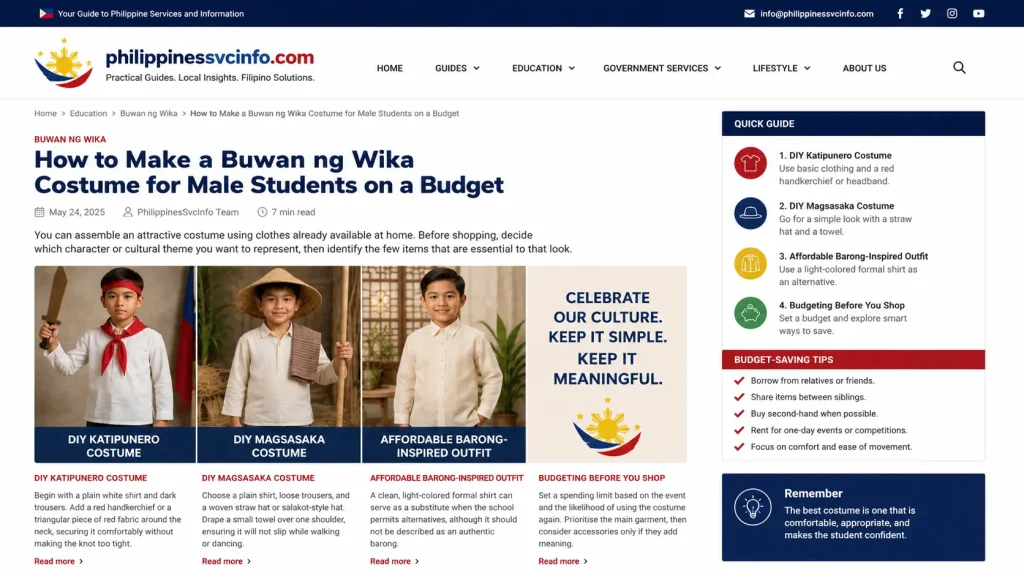
You can assemble an attractive costume using clothes already available at home. Before shopping, decide which character or cultural theme you want to represent, then identify the few items that are essential to that look.
DIY Katipunero Costume
Begin with a plain white shirt and dark trousers. Add a red handkerchief or a triangular piece of red fabric around the neck, securing it comfortably without making the knot too tight.
If the chosen character’s portrayal calls for a headband, use a separate piece of red cloth. Complete the look with plain shoes and, if permitted, a safe cardboard prop. There is no need to purchase a full costume set if the basic clothing already fits the school’s requirements.
DIY Magsasaka Costume
Choose a plain shirt, loose trousers, and a woven straw hat or salakot-style hat. Drape a small towel over one shoulder, ensuring it will not slip while walking or dancing.
For a more coordinated appearance, select neutral colours and keep the accessories simple. Avoid adding unnecessary props that make it difficult for a child to sit, move, or participate in group activities.
Affordable Barong-Inspired Outfit
If buying a traditional Barong Tagalog is beyond your budget, first ask whether borrowing or renting one is possible. A clean, light-coloured formal shirt can serve as a substitute when the school permits alternatives, although it should not be described as an authentic barong.
Pair the shirt with dark trousers and formal shoes. A neat fit and tidy appearance often contribute more to the finished outfit than expensive accessories.
Budgeting Before You Shop
Set a spending limit based on the event and the likelihood of using the costume again. Prioritise the main garment, then consider accessories only if they add meaning or are specifically requested.
Borrowing from relatives, sharing suitable items between siblings, or buying second-hand clothing can reduce costs. Renting is worth considering for a one-day competition, particularly when a high-quality embroidered barong or historical outfit would otherwise be expensive.
Accessories That Improve a Traditional Filipino Male Costume
Accessories should support the clothing and explain the intended character. They should not overwhelm the outfit or misrepresent a cultural tradition.
- Salakot: A traditional hat associated with various Filipino communities and rural settings. It can complement a farmer-inspired costume when appropriate to the theme.
- Red neckerchief: A useful element of some Katipunero-inspired school costumes. Its placement and colour should match the character being portrayed.
- Round eyeglasses: These can help suggest a José Rizal-inspired appearance when used with suitable period-style clothing.
- Walking cane: A cane may suit a historical gentleman portrayal if it is appropriate to the character. It is not a universal requirement for Rizal-inspired attire.
- Beaded jewellery and woven textiles: These may be appropriate for a particular regional or indigenous ensemble. Learn about their cultural context before using them, and do not treat ceremonial or sacred objects as ordinary costume decorations.
- Safe historical props: If a performance requires a bolo or similar object, choose a clearly non-functional replica made from cardboard or foam. Follow the school’s rules and avoid sharp edges, metal blades, or realistic weapons.
The best Buwan ng Wika costume for male students is not necessarily the one with the most accessories. A carefully chosen garment, respectful presentation, and clear understanding of the theme are more valuable than unnecessary decoration.
What to Wear for Buwan ng Wika School Programmes and Competitions
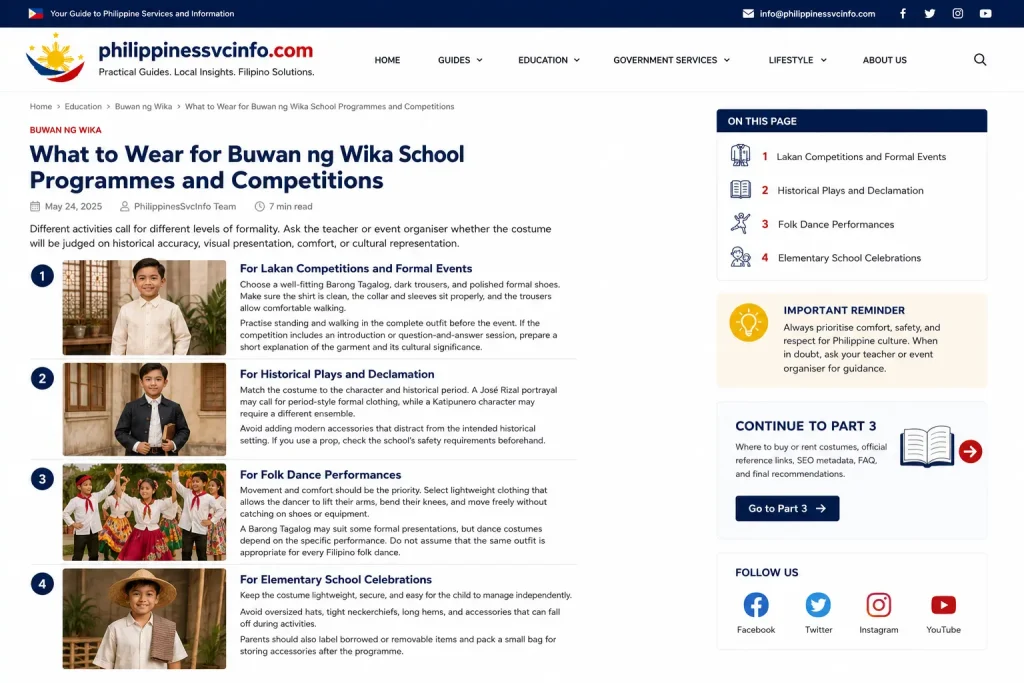
Different activities call for different levels of formality. Ask the teacher or event organiser whether the costume will be judged on historical accuracy, visual presentation, comfort, or cultural representation.
For Lakan Competitions and Formal Events
Choose a well-fitting Barong Tagalog, dark trousers, and polished formal shoes. Make sure the shirt is clean, the collar and sleeves sit properly, and the trousers allow comfortable walking.
Practise standing and walking in the complete outfit before the event. If the competition includes an introduction or question-and-answer session, prepare a short explanation of the garment and its cultural significance.
For Historical Plays and Declamation
Match the costume to the character and historical period. A José Rizal portrayal may call for period-style formal clothing, while a Katipunero character may require a different ensemble.
Avoid adding modern accessories that distract from the intended historical setting. If you use a prop, check the school’s safety requirements beforehand.
For Folk Dance Performances
Movement and comfort should be the priority. Select lightweight clothing that allows the dancer to lift their arms, bend their knees, and move freely without catching on shoes or equipment.
A Barong Tagalog may suit some formal presentations, but dance costumes depend on the specific performance. Do not assume that the same outfit is appropriate for every Filipino folk dance.
For Elementary School Celebrations
Keep the costume lightweight, secure, and easy for the child to manage independently. Avoid oversized hats, tight neckerchiefs, long hems, and accessories that can fall off during activities.
Parents should also label borrowed or removable items and pack a small bag for storing accessories after the programme.
Continue to Part 3 for where to buy or rent costumes, official reference links, SEO metadata, frequently asked questions, and the final recommendations.
Where to Buy or Rent a Buwan ng Wika Costume for Male Participants
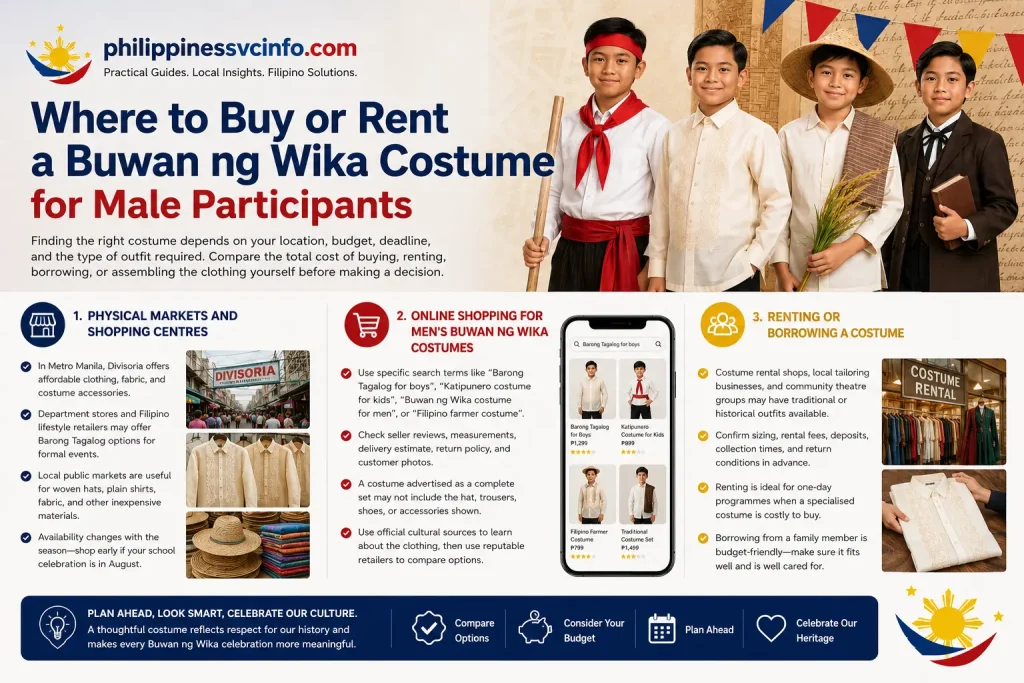
Finding the right costume depends on your location, budget, deadline, and the type of outfit required. Compare the total cost of buying, renting, borrowing, or assembling the clothing yourself before making a decision.
Physical Markets and Shopping Centres
In Metro Manila, Divisoria is a place to explore for affordable clothing, fabric, and costume accessories. Prices and available stock vary, so compare several sellers and check the quality before purchasing.
Department stores and Filipino lifestyle retailers may offer Barong Tagalog options for formal events. If you are looking for a premium garment, ask about the fabric, embroidery, sizing, and care instructions rather than choosing solely by appearance.
Local public markets can also be useful for finding woven hats, plain shirts, fabric, and other inexpensive costume materials. Availability often changes with the season, so shop early if your school celebration takes place in August.
Online Shopping for Men’s Buwan ng Wika Costumes
Online marketplaces can help you compare a wider range of Buwan ng Wika costumes for male students and adults. Search using specific phrases such as “Barong Tagalog for boys”, “Katipunero costume for kids”, “Buwan ng Wika costume for men”, or “Filipino farmer costume”.
Before placing an order, check the seller’s reviews, garment measurements, delivery estimate, return policy, and customer photographs where available. A costume advertised as a complete set may not include the hat, trousers, shoes, or accessories shown in its product images.
Official websites and online shopping platforms serve different purposes. Use official cultural sources to learn about the clothing and its background, then use reputable retailers to compare purchasing options.
Renting or Borrowing a Costume
Costume rental shops, local tailoring businesses, and community theatre groups may have traditional or historical outfits available. Contact them in advance to confirm sizing, rental fees, deposits, collection times, and return conditions.
Renting can be a sensible choice for a one-day school programme, particularly when a specialised costume would be expensive to buy. Borrowing a suitable garment from a family member can be even more economical, provided it fits properly and is treated with care.
Official Websites for Buwan ng Wika Research
When preparing a costume for a school programme, use reliable references to understand Filipino language, history, textiles, and cultural traditions. These official websites are useful starting points.
The KWF is a Philippine government agency responsible for promoting the development and preservation of Filipino and other Philippine languages. Its website is the primary reference for information related to the commission and its language programmes.
The NCCA publishes information about Philippine cultural communities, traditional arts, heritage, and textile practices. Its resources can help students investigate the background of a regional costume or traditional garment.
This cultural heritage resource provides information about registered heritage properties and related cultural records. It can support research into Philippine heritage, although it should not be treated as a shopping directory or a complete guide to costume construction.
Students and parents can consult the Department of Education’s official website for education-related announcements and guidance. For specific costume requirements, however, the school’s own programme instructions or teacher should take priority.
These links help distinguish cultural research from fashion shopping. If you are representing a particular indigenous community, look for sources that discuss that community directly rather than relying entirely on generic costume listings.
Common Mistakes to Avoid When Choosing a Buwan ng Wika Outfit
A costume may look attractive in a photograph but still be unsuitable for the event. Avoid these common problems when preparing a Buwan ng Wika costume for male students.
Choosing the wrong costume for the theme: A Barong Tagalog, a Katipunero outfit, and an indigenous regional ensemble communicate different things. Confirm the assigned theme before buying clothing.
Prioritising appearance over comfort: Tight collars, heavy fabrics, long hems, and poorly fitted trousers can make school activities uncomfortable. Try on the complete outfit before the celebration.
Mixing unrelated cultural elements: Do not combine garments and accessories from different communities simply because their colours match. Identify the tradition you intend to represent and research its clothing.
Assuming every traditional-looking outfit is authentic: A white T-shirt and red bandana may work as a budget costume inspired by a historical character, but they are not necessarily an accurate historical uniform. Be clear about the difference between an inspired costume and traditional clothing.
Spending too much on a one-day event: Consider borrowing, renting, or reusing clothes you already own. A thoughtful costume does not need to be expensive to communicate its intended theme.
Ignoring safety rules: Avoid sharp props, loose accessories, and clothing that restricts movement. Follow the school’s instructions about permitted items.
FAQs About Buwan ng Wika Costumes for Men
Final Tips for Choosing the Right Male Costume
The most suitable Buwan ng Wika costume for male participants combines a clear theme, comfortable clothing, and respect for Filipino culture. A traditional Barong Tagalog offers a formal option, while historical outfits and regional clothing allow students to explore different aspects of Philippine identity.
Before the event, confirm the dress code, check the costume’s fit, prepare any required accessories, and research the background of the garment. If the budget is limited, borrowing or creating a costume from existing clothes can be just as practical as purchasing a complete set.
Above all, remember that Buwan ng Wika is about appreciating language and cultural heritage, not simply wearing a costume. A thoughtful presentation that explains what the clothing represents can make the celebration more meaningful for students, families, and audiences.
Discover What You Need to Know:
- Native Camp Guide Philippines 2026: Login, Free Trial, Plans, Lessons & Booking
- MMSU Student Portal Phulippines 2026: Login, Enrollment, Grades, Schedule & Form 5 Guide
- PNPA Admission Philippines 2026: Requirements, Application & PNPACAT Guide
- SLU Student Portal Philippines 2026 : Login, Enrollment, Grades & Password Reset Guide
- mBlock 5 Tutorial Philippines 2026: Download, Setup, Coding & Robotics Guide